
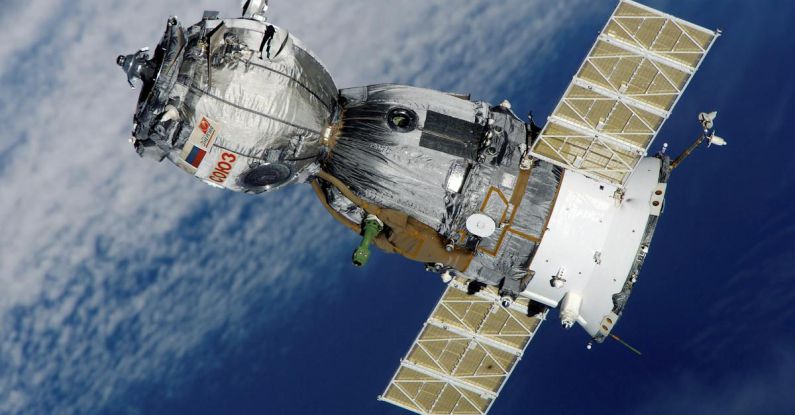
How Do Satellites Benefit Earth?
Satellites play a crucial role in our daily lives, offering a multitude of benefits that are often taken for granted. These orbiting technological marvels provide a range of services that positively impact various aspects of our world, from communication and navigation to weather forecasting and environmental monitoring. The significance of satellites cannot be overstated, as they contribute to the advancement of technology, scientific research, and even emergency response efforts.
Enhancing Communication Networks
One of the primary ways in which satellites benefit Earth is through their role in enhancing global communication networks. Satellites facilitate the transmission of data, voice calls, and internet connectivity across vast distances, enabling seamless communication between individuals and organizations worldwide. Whether it’s making a phone call, browsing the internet, or streaming content, satellite communication plays a pivotal role in keeping us connected in today’s digital age.
Improving Navigation and Location Services
Satellite navigation systems, such as the Global Positioning System (GPS), have revolutionized the way we navigate and locate ourselves in the world. By leveraging signals from satellites orbiting the Earth, GPS enables precise positioning and timing information that is essential for a wide range of applications, including transportation, logistics, surveying, and emergency response. Thanks to satellites, we can accurately navigate our way through unfamiliar terrain and reach our destinations with ease.
Advancing Weather Forecasting and Climate Monitoring
Satellites are instrumental in advancing weather forecasting capabilities and monitoring changes in the Earth’s climate. By capturing high-resolution images of the Earth’s atmosphere, oceans, and land surfaces, satellites provide valuable data that meteorologists use to track weather patterns, predict severe storms, and monitor environmental changes. This information is essential for mitigating the impact of natural disasters, planning agricultural activities, and understanding the dynamics of climate change.
Enabling Remote Sensing and Environmental Monitoring
Satellites are also invaluable tools for conducting remote sensing and environmental monitoring activities. By capturing images and data from space, satellites enable scientists to study changes in land use, monitor deforestation, track wildlife migration patterns, and assess the health of ecosystems. This information is critical for conservation efforts, resource management, and understanding the impact of human activities on the environment. Satellites provide a bird’s-eye view of our planet, allowing us to monitor and protect its natural resources more effectively.
Facilitating Emergency Response and Disaster Management
In times of crisis, satellites play a vital role in facilitating emergency response and disaster management efforts. During natural disasters such as hurricanes, earthquakes, or wildfires, satellites provide real-time imagery and data that help emergency responders assess the situation, coordinate rescue operations, and deliver aid to affected areas. The ability to quickly gather information from space is crucial for saving lives, minimizing damage, and rebuilding communities in the aftermath of a disaster.
Promoting Scientific Research and Exploration
Satellites have opened up new frontiers for scientific research and exploration, allowing researchers to study the Earth, its atmosphere, and outer space in unprecedented detail. Satellites are used to monitor changes in the environment, study the effects of climate change, track wildlife populations, and conduct experiments in microgravity. Additionally, satellites are essential for exploring other planets, moons, and celestial bodies in our solar system, providing valuable data that expands our understanding of the universe.
Conclusion: Harnessing the Power of Satellites for a Better Future
Satellites have revolutionized the way we perceive and interact with our planet, offering a wide range of benefits that touch nearly every aspect of our lives. From enhancing communication networks and improving navigation services to advancing weather forecasting and environmental monitoring, satellites play a critical role in shaping the world we live in. By harnessing the power of satellites for scientific research, emergency response, and exploration, we can continue to unlock new possibilities and pave the way for a better future for all.